Too Much to Know: How Deep Vocaloid Fandom Knowledge Is Quietly Keeping Newcomers Away from Live Shows
Imagine you've just discovered Hatsune Miku through a TikTok clip. The song slaps. The visuals are wild. You think, okay, I want to see this live. So you hop on Reddit to ask where to start — and within twenty minutes, you're drowning in a thread debating V3 versus V4X vocal banks, whether a certain producer's early Niconico catalog is essential listening, and why you absolutely cannot call yourself a real fan until you've sat through at least three Magical Mirai livestreams.
You close the tab. You don't buy a ticket.
This scenario plays out more often than most people in the Vocaloid community want to admit. And it's at the center of what's becoming one of the more quietly urgent conversations in the US live event space: is the fandom's legendary depth actually hurting its own growth?
The Knowledge Wall Nobody Built on Purpose
Here's the thing — nobody sat down and designed a gatekeeping system. It emerged organically, the way most fandom cultures do, through years of passionate people sharing what they love in increasingly specific detail. Vocaloid has an unusually rich ecosystem for this. You've got decades of producer history, hundreds of vocal synthesizers, entire subgenres that trace back to specific Nico Nico Douga eras, and a creative community that treats musical context almost like academic citation.
For longtime fans, that density is a feature. It's what makes the scene feel like more than just a music genre — it feels like a world.
But for someone walking in cold? It can feel less like a welcome mat and more like a pop quiz they didn't study for.
"I didn't know what a producer was in the Vocaloid sense when I first got interested," says Maya, a 24-year-old from Atlanta who attended her first Miku-related event last year. "I thought it just meant, like, someone who makes beats. When I asked a basic question in a Discord server, I got a whole lecture about DECO*27's discography. I felt stupid. I almost didn't go to the show."
She did go. But she almost didn't. And that gap — between almost didn't and didn't — is where events lose bodies and the scene loses potential converts.
Event Organizers Are Starting to Notice
People who actually sell tickets to Vocaloid-adjacent events in the US are increasingly aware of this dynamic. Several organizers who work convention circuits and standalone concert events have started paying closer attention to how marketing language lands on people who aren't already deep in the ecosystem.
"We used to write event copy that was basically for fans," explains one organizer who runs panels and performance showcases at anime conventions on the East Coast. "We'd name-drop producers, reference specific albums, use terminology that only someone already in the scene would recognize. And then we'd wonder why the same two hundred people kept showing up."
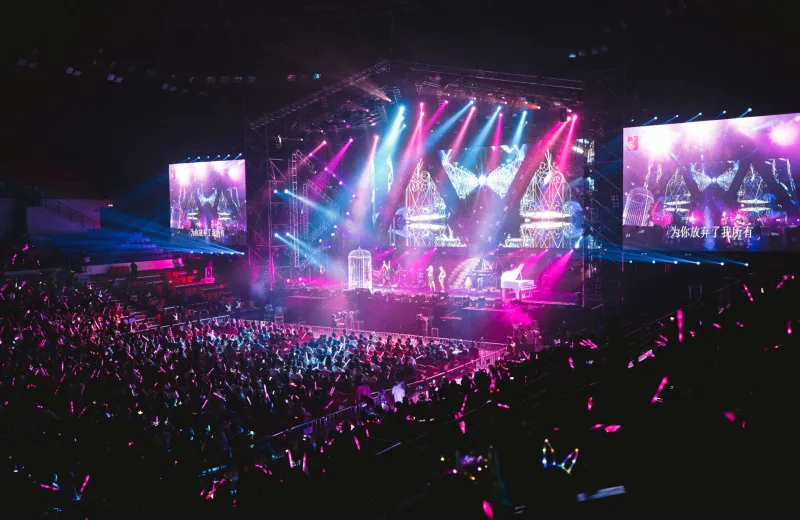
The shift toward more accessible language — describing Vocaloid concerts in terms of the experience rather than the canon — has shown early promise at some events. Framing a show around spectacle, community energy, and the novelty of a holographic performer tends to resonate more broadly than leading with insider references. It's not dumbing things down. It's just meeting people where they are.
The challenge is doing that without making longtime fans feel like the thing they love is being watered down for mass consumption. That's a genuinely tricky balance.
The Authenticity Trap
Long-time community members often push back on simplified marketing with a concern that's worth taking seriously: if you strip away the depth to attract casual fans, do you end up with an audience that doesn't really get what they're watching?
"Part of what makes a Vocaloid concert special is that the people in that room understand what they're seeing," argues one producer who's been active in the US fan community for over a decade. "There's a shared language. When a track drops that has history behind it, everyone in the audience knows. That collective recognition is part of the magic. If you fill the room with people who just think it's a cool laser show, does that energy survive?"
It's a fair question. Concert experiences are shaped by the crowd as much as the performance. A room full of people who are emotionally invested in the material creates a different atmosphere than a room full of curious tourists.
But here's the counterpoint: those curious tourists can become deeply invested fans. That's how every fandom grows. The question is whether the entry point is inviting enough to let that transformation happen.
Casual Fans Aren't the Enemy
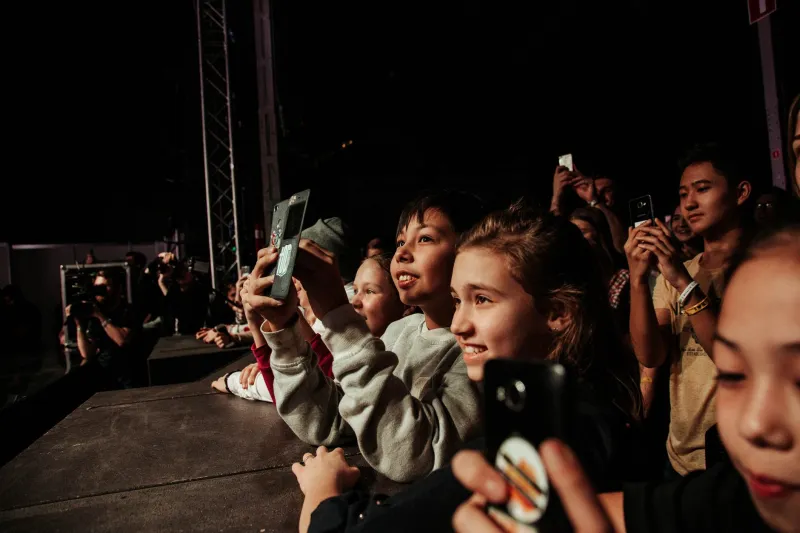
One of the more persistent myths in tight-knit fandoms is that casual engagement is somehow a threat to the culture. In reality, casual fans are often the pipeline. Someone who shows up to a Miku concert because their friend dragged them along might leave with a Spotify playlist, a Discord server, and a genuine curiosity that deepens over months.
But that progression only happens if the initial experience doesn't make them feel like outsiders.
"I went to my first event not knowing much," says Jordan, a 19-year-old from Chicago who's now deep in the producer rabbit hole. "The show itself was incredible and I didn't need to know anything to enjoy it. But afterward, when I tried to get more involved online, it felt like there was a test I kept failing. Some communities were great. Others made it clear I hadn't put in enough hours yet."
That post-event experience matters more than most people realize. The concert itself might be accessible and welcoming. But if the surrounding community infrastructure — the Discord servers, the Reddit threads, the fan forums — functions like an exclusive club, the overall impression sticks.
What Could Actually Help
The good news is that this isn't an unsolvable problem. A few approaches are already showing up in corners of the US Vocaloid event space.
Some conventions are experimenting with beginner-friendly panels that run alongside deeper-dive programming — a "Vocaloid 101" session that gives newcomers context without condescension. Others are thinking more carefully about how event descriptions are written, leading with experience and atmosphere before getting into specifics.
On the community side, a handful of fan groups have made explicit welcoming culture part of their identity — actively encouraging questions, discouraging pile-ons when someone doesn't know something, and treating "I'm new" as a good thing rather than a liability.
None of this requires abandoning the depth that makes Vocaloid fandom what it is. The lore, the producer history, the vocal bank debates — all of that can coexist with a front door that's actually easy to walk through.
The Scene's Future Is Both/And, Not Either/Or
The Vocaloid gatekeeping paradox isn't really about gatekeepers. It's about a fandom that got so good at loving something deeply that it forgot to leave the light on for people still finding their way.
The depth isn't the problem. The assumption that depth is required for entry is the problem.
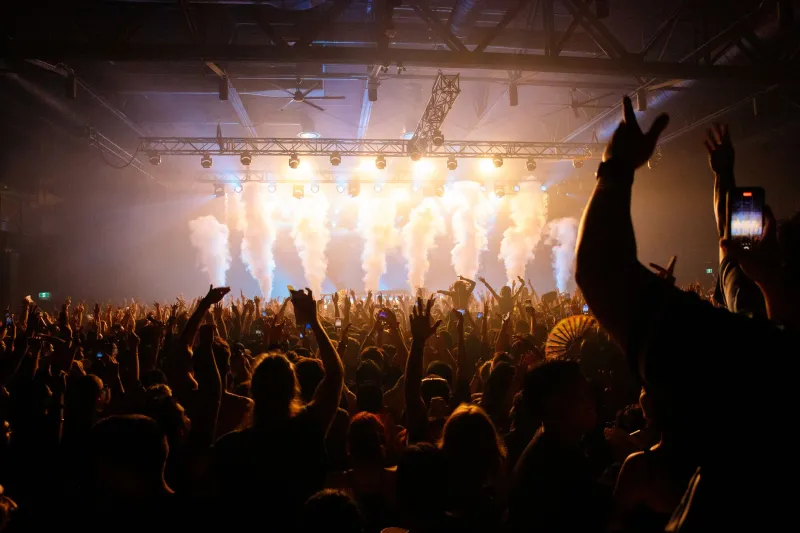
Live events are one of the best opportunities to fix that. A concert doesn't ask you to pass a knowledge test before the lights go down. The music hits the same whether you've been a fan for ten years or ten days. The job of the surrounding ecosystem — the marketing, the community spaces, the event programming — is to make sure people feel that from the moment they first hear about the show.
When that happens, the scene grows. And a bigger scene means more shows, more producers getting heard, and more rooms full of people who genuinely love what they're watching — at every level of fandom depth.