Same Tour, Different Show: The Secret Science Behind Regional Vocaloid Setlists
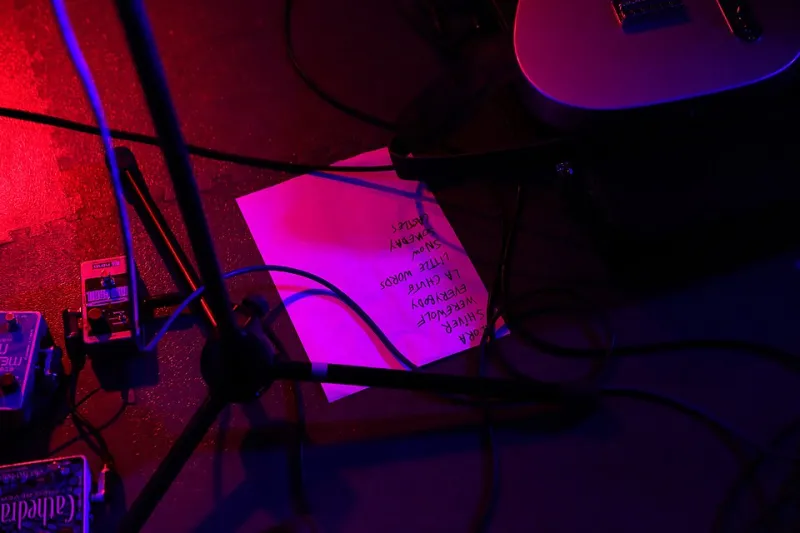
Photo: Manfred Werner - Tsui, CC BY-SA 3.0, via Wikimedia Commons
You've seen it happen. Two fans, same tour, completely different experiences. One walks out having heard three deep-cut tracks they've been waiting years to see performed live. The other got a polished, radio-friendly run of the biggest hits. Both shows sold out. Both crowds went wild. But the setlists? Barely overlapping.
This isn't random. Behind every Vocaloid concert in the US, there's a surprisingly detailed decision-making machine humming away — and the songs that make the cut say a lot more about your city than you might think.
Venue Size Changes Everything
Let's start with the most overlooked factor: the room itself.
Smaller venues — your 1,500-capacity clubs in cities like Nashville or Portland — operate under completely different technical constraints than a 10,000-seat arena in New York or LA. Holographic projection rigs, the kind that make a Hatsune Miku concert feel genuinely otherworldly, require serious infrastructure. Rigging points, projection throw distances, LED floor configurations — all of it dictates what's physically possible on any given night.
Producers working on US Vocaloid events have been pretty candid about this when fans push for answers online. The short version: some of the most visually complex tracks in the catalog simply can't be executed in smaller rooms without cutting corners that would ruin the experience. So those songs get quietly benched for the major market stops, replaced by arrangements that translate better to a more intimate setup.
The flip side? Smaller venues can pull off certain atmospheric moments that get swallowed whole in arenas. A quieter, emotionally raw track that would feel lost in a 15,000-seat space can absolutely destroy a crowd of 800 people in the right room. Promoters who know their stuff lean into that.
Reading the Room — City by City
Here's where things get genuinely interesting. US Vocaloid fanbases aren't monolithic. The community in Seattle has a different listening culture than the one in Miami. Chicago's Vocaloid scene skews toward a specific era of producers. The Southern California crowd has grown up alongside certain artists in ways that create intense, almost local-legend-level attachment to specific tracks.
Event organizers aren't guessing at this. Streaming data, convention panel attendance records, merch sales by region, and even Discord server activity all feed into a rough picture of what each market actually wants to hear. It's not a perfect science — and promoters will be the first to admit that — but it's a lot more data-driven than most fans assume.
One pattern that shows up consistently: cities with larger established anime convention scenes tend to have audiences that are more familiar with deep catalog material. They've been to panels, they've attended DJ sets, they've spent years in community spaces where the obscure stuff gets celebrated. Promoters serving those markets can afford to take more risks with the setlist. Cities where Vocaloid is still breaking through to a broader audience often get a more curated, accessible run of tracks — partly out of genuine strategy, partly to avoid losing newer fans in the first twenty minutes.
The Social Media Wildcard
Voting campaigns have become a real force in setlist shaping, and the results are... complicated.
Several US-based promoters have experimented with pre-show fan polls — Instagram stories, Twitter threads, dedicated event app features — asking audiences to weigh in on which songs they want to hear. On paper, it sounds democratic. In practice, it creates its own set of headaches.
The biggest issue is that online voting populations don't always reflect the actual ticket-buying audience. A track can dominate a poll because it has a loud, organized fanbase on social media while the majority of people in the seats have never heard it. Promoters have to weigh poll results against everything else they know about a market, which sometimes means the fan-voted song makes the cut and sometimes means it gets quietly dropped in favor of something that'll land better for the full room.
That said, voting campaigns have genuinely surfaced tracks that wouldn't have made it otherwise. There are documented cases in the US Vocaloid community where a sustained, coordinated push from fans in a specific city resulted in a song getting performed there for the first time on a major tour. It works — just not as cleanly as the campaigns make it look.
Technical Riders and the Songs That Just Can't Travel
Some tracks have technical requirements that make them genuinely difficult to tour. Custom lighting sequences that require pre-programmed rigs. Audio arrangements that depend on equipment not every venue can accommodate. Costume or visual elements tied to specific production setups.
This is a bigger factor in the Vocaloid world than in conventional touring because so much of the live experience is built around synchronized visual production. A song performed with a full holographic sequence and a live band arrangement is a completely different beast to transport, set up, and execute than an acoustic-leaning track with simpler staging.
Producers making these calls are often balancing creative integrity against tour economics. Bringing the full technical package for every song in the catalog to every city on a US run would price most shows out of reach for the fans who want to attend them. So choices get made, and the setlist reflects those choices whether the audience knows it or not.
What This Means for You as a Fan
Honestly? Knowing the machine exists changes how you experience the show.
If you're in a major market, you're likely getting the full production — the spectacle, the hits, the visual setpieces that make Vocaloid concerts genuinely unlike anything else in live music. If you're in a smaller city or a region where the scene is still growing, you might be getting a leaner but in some ways more personal version of the same tour.
Neither is objectively better. Some of the most memorable Vocaloid concert moments US fans describe happened in smaller rooms where the production was stripped back and the emotional connection to the music filled the gap.
The best thing you can do is pay attention to what your local community is doing before the show hits your city. Fan petitions, voting campaigns, and even coordinated social media pushes have demonstrably moved the needle on setlist decisions. Promoters are watching, even when it doesn't look like it.
And if the deep cut you've been waiting for doesn't make it to your city this time? There's always the next tour — and by then, someone somewhere will already be running the campaign to make sure it does.