Behind the Curtain: Why Your Most-Loved Vocaloid Track Never Hits the Live Stage
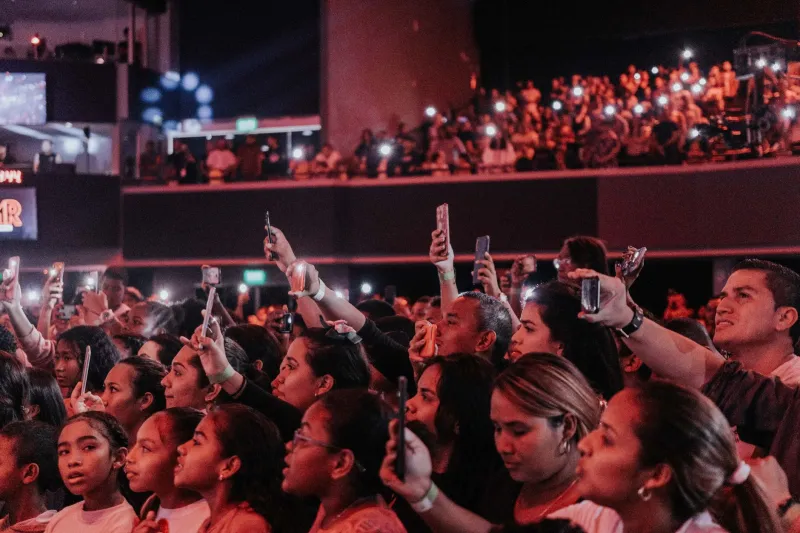
Every Vocaloid fan has been there. The lights drop, the crowd loses its mind, and song after song lands with the kind of energy that makes you forget you're standing in an arena full of strangers. And then the encore ends. The holographic stage goes dark. And you're left doing the same quiet math you always do after a show: Why didn't they play that one?
It's one of the most frustrating and weirdly universal parts of the live Vocaloid experience in the US. The setlist feels curated to within an inch of its life — and somehow, the track you've been waiting years to hear live just doesn't make the cut. Again.
So what's actually going on behind the scenes? It turns out the answer is a lot messier, and a lot more interesting, than you might expect.
It Starts (and Sometimes Ends) With Licensing
Here's the thing most fans don't realize: not every Vocaloid song that exists on the internet is legally cleared for a live performance event in the United States. A huge portion of the Vocaloid catalog was created by independent producers — sometimes teenagers making music in their bedrooms — and tracking down the rights holders for a touring production is genuinely complicated work.
Event organizers who've worked on US Vocaloid concerts describe a licensing process that can stretch over months. Some producers are enthusiastic and easy to reach. Others have moved on from the scene entirely, changed their contact information, or have representation that moves slowly. And a small number have licensing terms that simply don't work for the scale of a North American live event.
That fan-favorite deep cut from 2011 with two million Niconico plays? There's a real chance the producer behind it has never been formally approached — or that when they were, the timeline didn't line up with tour production schedules.
The Technical Side Is No Joke
Even once a track is cleared, it still has to survive the gauntlet of live production. Vocaloid concerts aren't like a typical band show where the performers can adapt on the fly. Every visual element — the holographic rendering, the stage lighting cues, the synchronized choreography — has to be built from scratch for each individual song.
That's an enormous amount of work per track. Production teams talk about the cost and labor involved in bringing a single song to the live stage, and it's not a small number. For a touring production with a fixed budget, every slot on the setlist is essentially a line item. Songs that require complex custom visuals or that were produced in formats that don't translate cleanly to live projection systems get deprioritized fast.
Older tracks, especially ones that predate the modern era of Vocaloid visual design, can require near-total reconstruction to look good on a contemporary stage. That's a significant investment for a song that might only appeal to a segment of the audience.
The Business Case for Playing It Safe
Let's be honest about something: concert programming is partly an art and partly a numbers game. Promoters and organizers are making bets on which songs will generate the most crowd energy, the most social media content, and ultimately the most ticket sales for future dates.
The songs that consistently get played — the ones that feel like they've been on every setlist for the last five years — are there because they work. They get people on their feet. They drive singalongs. They clip well on TikTok. From a pure business standpoint, there's real risk in swapping out a proven crowd-pleaser for a deep cut that might only resonate with the most dedicated 15% of the room.
This is especially true for US events, where Vocaloid concerts are still building mainstream awareness. Organizers are often consciously trying to design shows that work for both the hardcore fan who's been in the scene since middle school and the person who just discovered Miku through a viral video last month. That's a tough balance, and it tends to favor the recognizable over the obscure.
The Politics of the Producer Ecosystem
There's another layer here that doesn't get talked about much: the relationships between event organizers and the broader producer community. The Vocaloid world has its own internal hierarchies, fandoms, and politics, and those dynamics absolutely influence what ends up on a setlist.
Producers with strong ties to event organizers, or whose work has historically performed well at live events, tend to get their songs included more often. Newer or more niche producers — even ones with deeply passionate fanbases — may simply not have the same access or visibility within the production pipeline.
This isn't necessarily malicious. It's just how creative industries work. But it does mean that the setlist you see isn't purely a reflection of what fans love most. It's also a reflection of who knows who, who has an existing relationship with the production team, and whose catalog is easiest to work with.
So What Can Fans Actually Do?
Here's the good news: fan advocacy genuinely moves the needle, especially in a scene as community-driven as Vocaloid.
Vote loudly and publicly. Most major Vocaloid event organizers — including those running US shows — pay attention to social media conversations, fan polls, and community threads. When a song trends organically among fans in the lead-up to a tour announcement, it registers. Don't underestimate the power of a well-organized fan campaign.
Support the producers directly. When a producer sees that their more obscure work has a passionate audience in the US, it makes them more likely to engage with licensing requests and more motivated to push for their songs to be included. Streaming, sharing, and buying from producers whose work you want to see live is a form of advocacy.
Show up for the full show. This sounds obvious, but attendance data matters. When US Vocaloid events consistently sell out and show strong engagement with the full setlist — not just the hits — it signals to organizers that the American fanbase is sophisticated enough to support more adventurous programming.
Engage with organizers directly. Many US-based Vocaloid event organizers are genuinely plugged into fan communities. If you're active on Discord, Reddit, or fan forums, you're probably closer to the people making these decisions than you think. Respectful, specific feedback — "I'd love to see this song and here's why it would work live" — lands differently than a general complaint.
The Setlist Will Never Be Perfect — But It Can Get Better
The reality is that no single concert can satisfy every fan's wish list. The constraints are real, the tradeoffs are genuine, and the people making these decisions are mostly working hard to put on the best show they can within serious limitations.
But the gap between what's possible and what fans actually want to hear is smaller than it's ever been. The US Vocaloid scene is growing. Production budgets are increasing. And organizers are increasingly aware that the fanbase here is hungry for more than the same rotation of greatest hits.
Your favorite deep cut might not make the next tour. But it's closer to the stage than it's ever been.