Locked Out: Why American Concert Venues Won't Open Their Doors to Vocaloid
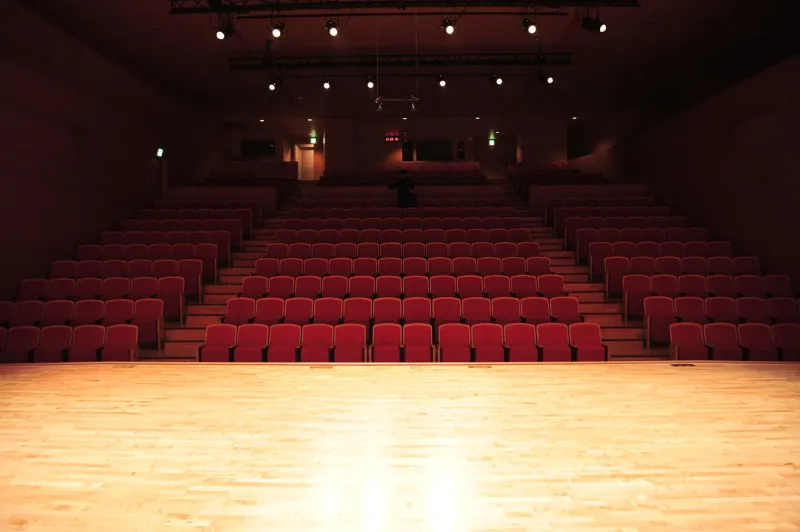
If you've ever tried to rally your local fan community around the idea of bringing a Vocaloid production to your city — only to watch it fizzle out before it even got started — you're not imagining things. There's a very real wall between the Vocaloid scene and the mid-tier American concert hall, and it's built out of equal parts misinformation, logistical fear, and plain old industry inertia.
We reached out to venue managers, independent promoters, and grassroots fan organizers across the country to figure out what's actually going on. What we found is a story about an entertainment industry that still doesn't know what to do with something it can't easily categorize.
"We Didn't Know Who Was Going to Show Up"
That quote comes from a venue operations manager at a mid-size performing arts center in the Midwest — someone who asked to remain anonymous but was happy to explain their hesitation around booking a Vocaloid-adjacent event a couple of years ago.
"We had a promoter pitch us something," they said. "Holographic performer, anime-style visuals, electronic music. Our first instinct was: is this a rave? Is this a kids' show? We genuinely didn't know how to staff it, how to market it, or what kind of crowd to prepare for."
That confusion — the inability to slot Vocaloid into a familiar box — comes up over and over again. Traditional venue bookers are used to working with known quantities. A country act draws a certain crowd. A Broadway touring show draws another. Vocaloid sits somewhere outside their mental map entirely, and that unfamiliarity reads as risk.
The irony is that Vocaloid audiences are, by most accounts, remarkably well-behaved and enthusiastic spenders. Fan organizers who have run convention-circuit events consistently describe their crowds as passionate, punctual, and eager to drop money on merch. But that reputation hasn't made it into the vocabulary of mainstream venue managers yet.
The Tech Spec Problem Is Real — But It's Being Overstated
One of the most common reasons venues cite for passing on Vocaloid productions is the technical complexity. Holographic concerts require specific projection setups, precise rigging configurations, and in some cases proprietary equipment that venues simply don't have on hand.
That's a legitimate concern — but promoters who specialize in this space say it's being used as a catch-all excuse more often than it deserves to be.
"Yes, there are technical requirements," said one independent promoter who has worked on Japanese pop culture events across the West Coast. "But we bring our own crew. We bring our own gear in a lot of cases. What we need from the venue is cooperation and a loading dock that can handle the weight. That's not outrageous."
The bigger issue, she explained, is that venues don't want to take on the learning curve. Hosting a Vocaloid event means their staff has to get up to speed on something unfamiliar, and for a one-off booking, that investment feels like a lot of effort for an uncertain return.
What changes the math is repeat business — and that's exactly what the Vocaloid scene hasn't yet been able to promise most mid-tier markets.
The Chicken-and-Egg Trap Facing Secondary Markets
Here's where it gets circular and a little maddening. Venues in cities like Nashville, Denver, or Phoenix are hesitant to book Vocaloid events because they don't have data on local demand. But local demand can't be demonstrated without a local event. And local events can't happen without a venue willing to take the first step.
Fan organizers in these markets are painfully aware of this loop. Several community leaders we spoke with described spending months trying to connect promoters with venues, only to have one side or the other drop out before anything materialized.
"The promoters want a guarantee that the venue is on board before they commit," said one fan organizer who runs a Vocaloid community group in the Southeast. "And the venue wants a guarantee that there's demand before they commit. Nobody wants to move first, so nothing moves."
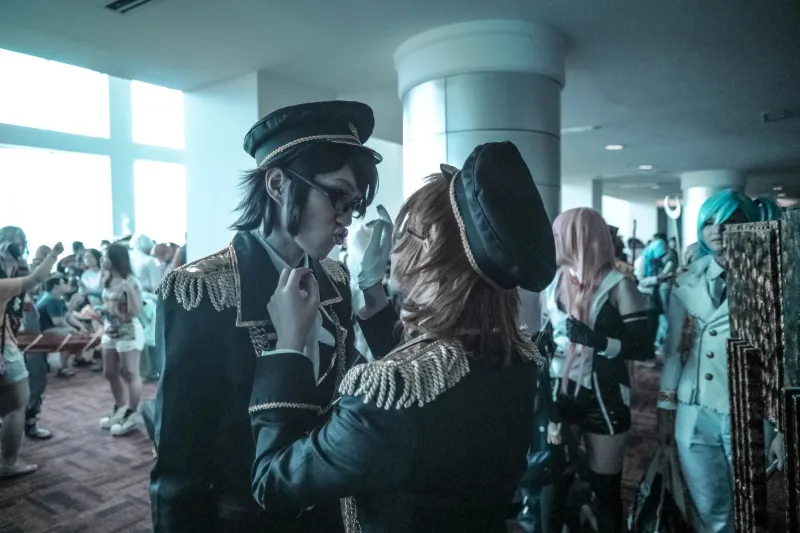
The convention circuit has partially filled this gap — anime conventions have become the de facto home for Vocaloid performances in cities that can't land a standalone show. But that's not a real solution. Convention stages are smaller, sound systems are rarely optimized for this kind of production, and the overall experience is a significant step down from what a proper concert hall could offer.
What the Misconceptions Are Actually Costing Fans
Beyond the logistical frustration, there's a cultural cost to this stalemate. When Vocaloid events are consistently relegated to convention floors or small club stages, it sends a message — however unintentional — that this is niche entertainment that doesn't deserve a serious platform.
That perception feeds itself. Casual fans who might be curious about attending a Vocaloid concert are less likely to take the plunge if the production value signals "underground hobby" rather than "legitimate live experience." And lower casual attendance numbers give venues more reason to keep passing.
"The shows that have happened in proper venues have been incredible," said a fan who traveled from Texas to catch a Vocaloid production in Los Angeles. "If that experience was available in my city, I genuinely think it would convert a ton of people who are on the fence about the whole scene. But they'll never know, because it's not coming to them."
What Actually Needs to Change
The people closest to this problem — promoters, fan organizers, and the occasional sympathetic venue staffer — tend to agree on a few things.
First, education. Venues need real data on Vocaloid audiences: who they are, what they spend, how they behave. The fan community has this information scattered across Discord servers and event recaps, but it hasn't been packaged in a way that speaks to venue decision-makers. That's a gap worth closing.
Second, relationships. The venues that have successfully hosted Vocaloid-adjacent events almost always had a personal connection — a staff member who was already a fan, or a promoter who had built trust over years of smaller bookings. Cold pitches don't work well in this industry. Warm introductions do.
Third, proof of concept at the local level. Some fan communities are starting to self-organize smaller, lower-stakes events specifically to demonstrate local demand to skeptical venues. It's slow work, but it's building a track record that didn't exist before.
None of this is a fast fix. But the venues are out there, the fans are out there, and the productions are getting better every year. The gap between those things is narrowing — even if it doesn't always feel that way from the outside.
For now, if your city is still stuck in the convention-circuit loop, know that you're not alone, and the people working to change it are closer to a breakthrough than the silence from local venues might suggest.